Annual Conference of Vocational and Business Education from September 16-18, 2026 in Rostock
Section Vocational and Business Education (BWP) of the German Society for Educational Science (DGfE)
"Vocational education science in times of global transformation and democratic responsibility"
Dear vocational and business educators,
Vocational education is subject to a special responsibility since it strengthens the democratic participation, makes fair chances possible and prepares people for a connected world.
The BWP 2026 is meant to show that the Vocational Education Science offers orientation, and does that practically, in communication and based on evidence.
We are pleased to see your many articles. Registration for the conference is now possible! (early bird rates until May 31, 2026)



Contact
If there are any questions regarding organisation or the content, turn to bwp2026uni-rostockde
Explanations of the conference topic of the 2026 BWP Section Conference
"Vocational Education and Training Science in Times of Global Transformation and Democratic Responsibility"
To provide suggestions for the conference contributions, thoughtful questions are presented in the context of research fields and design tasks that are closely related to the challenges and levels of vocational training research listed in the Call for Papers. They are intended as supplementary food for thought, particularly for the forums, and not as 1:1 prescriptions.
Macrolevel
- How can vocational training counteract global warming and global injustices in a "postcolonial" society? Are alternative economies needed and should they be included in vocational training curricula?
- What responsibility does vocational education and training science have on a global level? What effects do international organizations and companies have on national education policy?
- How do globally operating communication and information platforms and AI affect democratic structures and the opinion formation of learners in vocational education?
Exolevel
- How can trainees/learners, trainers, and NGOs be democratically involved in the development of educational innovations and goals? How are existing structures and participations (e.g. in task creation in the examination system, the development of training regulations) legitimized?
- How can structures be developed that offer flexible access and transitions in all regions while securing established qualification standards and the motivation of training companies? What contribution can vocational training make to overcoming inequality?
- What can make work in vocational education and training and at vocational schools attractive in times of a skilled labor shortage? How can academic teaching be (re)designed to meet the new challenges?
Mesolevel
- How can vocational education and training research contribute to breaking down institutional self-concepts, routines, and established practices (even within the own scientific community) in the face of challenges? Can it address and make visible existing power structures?
- How can the development of maturity and empowerment to act in non-linear processes, which are already addressed in the new standard job profile positions of the training regulations, be promoted while simultaneously fulfilling training occupation-related requirements?
- What conditions must be created in vocational schools and regional cooperation to make them centers of lived diversity and democratic and economic innovation?
Microlevel
- How can we prepare for phases of uncertainty in work and learning processes, as well as dealing with structural breaks in educational and life courses?
- How can relationship building in educational processes succeed in a way that participants develop resilience through self-efficacy experiences and experience courageous, solidarity-based action?
- How can individual support approaches be integrated inclusively into vocational training practice?
Scientific level
- To what extent can and should research itself be the subject and engine of change processes? What role do publication strategies and participatory research approaches play in this?
- What influence can and should (vocational) education research have on the quality and further development of the education system? How should political design tasks be prepared for in scientific careers?
- How can the transfer of research results into educational practice succeed, and what role do accompanying research in the funding programs play? How should advances in knowledge in adjacent scientific fields be incorporated?
With these and similar questions, the conference aims to take up different perspectives on change processes in the vocational education system and thus specifically bring the responsibility of vocational education science into the discourse in a time of global transformation and democratic requirements.
References:
Bauhardt, C. & Çaglar, G. (Hrsg.) (2010). Gender and Economics. Feministische Kritik der politischen Ökonomie. Wiesbaden:VS, https://content.e-bookshelf.de/media/reading/L-17808-5a6913fd7f.pdf
Büchter, K.; Herkner, V.; Kögler, K.; Kremer, H.-H. & Weyland, U. (Hrsg.) (2024). 50 Jahre Sektion Berufs- und Wirtschaftspädagogik in der Deutschen Gesellschaft für Erziehungswissenschaft (DGfE). Kontinuität, Wandel und Perspektiven. Opladen: Budrich. https://www.pedocs.de/volltexte/2024/31449/pdf/Buechter_et_al_2024_50_Jahre_Sektion.pdf
Buer, J. v. & Kell, A. (1999): Forschungsprojekt „Berichterstattung über Berufsbildungsforschung“. Abschlussbericht. (Arbeitsgemeinschaft Berufsbildungsforschungsnetz AG BFN). Berlin/Siegen 1999. Zeitschrift Berufsbildung, 77/1, (2023). Themenschwerpunkt: Nachhaltigkeit für und durch berufliche Bildung.
Council of Europe (2024). Promoting a culture of democracy in Vocational Education and Traininghttps://www.coe.int/en/web/education/-/promoting-a-culture-of-democracy-in-vocational-education-and-training
Hantke, H.; Kaiser, F.; Tafner, G.; Wittau, F. & Zurstrassen, U. (2025). Demokratiebildung als Querschnittsaufgabe beruflicher Bildung. In: K. Kögler; H.-H. Kremer & V. Herkner (Hrsg.): Jahrbuch der berufs- und wirtschaftspädagogischen Forschung 2025. (11–34) Budrich. https://shop.budrich.de/wp-content/uploads/2025/05/9783847432678.pdf
Hjelm-Madsen, M. & Kalisch, C. (2022). Regionale Disparitäten in der Berufsbildungsforschung: Deutungsmuster und Bewertungsansätze zwischen Vielfalt und Ungerechtigkeit. BWPAT, 42, https://www.bwpat.de/ausgabe/42/hjelmmadsen-kalisch
Lempert, W. (2008). Zwei einfältige Fragen an alle 'gelernten' Berufs- und Wirtschaftspädagogen: wider die Unvernunft derzeit gravierender, weltweit grassierender, längst dominierender, noch eskalierender, weiter sich steigernder ökonomistischer Perversionen menschlichen Handelns, Lehrens und Lernens. Zeitschrift für Berufs- und Wirtschaftspädagogik, 104(3), 467-468. https://nbn-resolving.org/urn:nbn:de:0168-ssoar-131862
The program will follow soon.
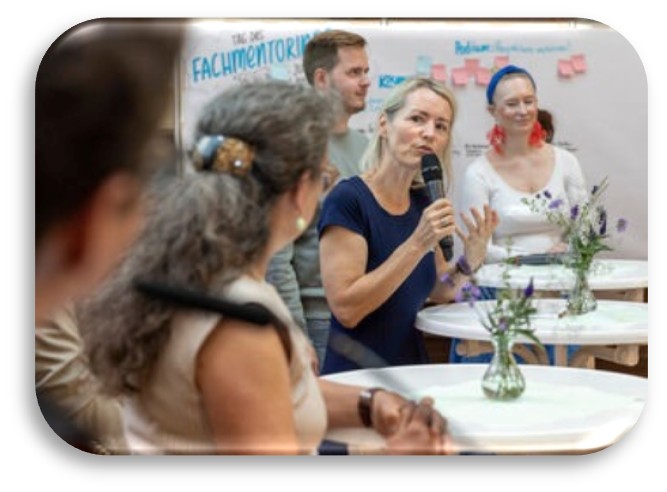
Vocational education science in times of global transformation and democratic responsibility
Due to the challenging transformation processes (see the theme of the conference) Voc. ed. scientists are invited to share and discuss their already taken and future action for participating in the education and science policy.
This includes the publication of research results, reports and recommendations, as well as the participation in committees at the international, federal, state, regional, and university levels. Further areas of influence include participating in counseling circles, professional societies, and the integration of political issues into academic teaching, as well as the opening of universities for social engagement, up to the co-creation of politics and the promotion of young talent within one's own discipline.
Different perspectives (keywords in parentheses) from German-speaking countries could be gathered succesfully:
- Prof. Dr. Karin Büchter, HSU -Hamburg, Scientific Advisory Board of IGM/VERDI
- Dr. Christine Engartner, University of Göttingen, Society for Political Youth and Adult Education
- Dr. Franz Gramlinger, ARQA-VET / RQB, Vienna, European Quality Assurance in Vocational Education
- Dr. Robert Hantsch, University of Rostock, Transformative Business Education in University Teaching
- Dr. Jennifer Schauer, University of Dresden, Early and Mid Career Researcher (EMCR) of the BWP Section
- Prof. Dr. Katrin Kraus, University of Zurich, The Swiss Society for Vocational Research and Practice (SGAB)
- Prof. Dr. Karl Wilbers, University of Erlangen-Nuremberg, Scientific Advisory Board of the BIBB
- Prof. Dr. Birgit Ziegler, TU Darmstadt, Standing Conference of Ministers of Culture (SWK)
Moderation: Prof. Dr. Franz Kaiser (University of Rostock)
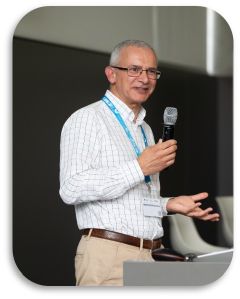
VET beyond skill formation: the relevance of citizenship for a European VET
The keynote will address three issues and their interrelations: Whether VET should focus upon (technical) skill development and take into consideration only labour market needs; whether citizenship is a valuable content deserving room in the VET curriculum, and where and how (including different sites of learning); and whether VET has a role in fostering European citizenship and contribute to the Union of Workers, and whether the current EU policies (particularly the Pact for Skills and the European Pillar of Social Rights) are willing to make use of VET to strengthen the European Union.
Dr. Fernando Marhuenda- Fluixá is Professor in Didactics and School Organisation at University of Valencia (Spain) since 1998 and Full Professor and Chair since 2011. He is member of the VETNET board within EERA and of the VET & Culture network and host of several VET-research Conferences in Valencia.
His research focus is on policies and practices at the crossroads among social education, adult education and vocational education and transitions between education and work, particularly for vulnerable population; and he has also studied policy reform and transfer of VET and dual VET with a critical view. He leads the interdisciplinary research group “Transicions”, which was awarded the European Research Award in 2019 by the European Commission.
Reading Transformation: Power, Work and Inquality from a feminist perspective
The Keynote argues, that global transformation processes like digitalisation, decarbonisation and demographic change cannot be solely understood as technological or economic adaptation processes. Seen from the feminist economics they are rather analysed as profound power and distribution upheavals, which rearrange, reinforce or bring the existing inequalities to the surface. The central question is, whose work, whose risks and whose needs are either considered or excluded in transformation processes. The keynote shows how feminist economics critically examine dominant transformation narratives and open up alternative orientations for a socially just, democratic, and sustainable design of change.
Dr. Aysel Yollu-Tok is a professor of economics with a focus on economic and social policy, and director of the Harriet Taylor Mill Institute for Economics and Gender Research at the Berlin School of Economics and Law. She is also the chair of the Society for Social Progress (Gesellschaft für Sozialen Fortschritt e.V) and the expert commission for the third equality report of the federal government, in which comprehensive recommendations for a gender-equal digitalization were developed.
Her research focuses on feminist economics, labor market and social policy.

Information for the evening get together will follow soon.
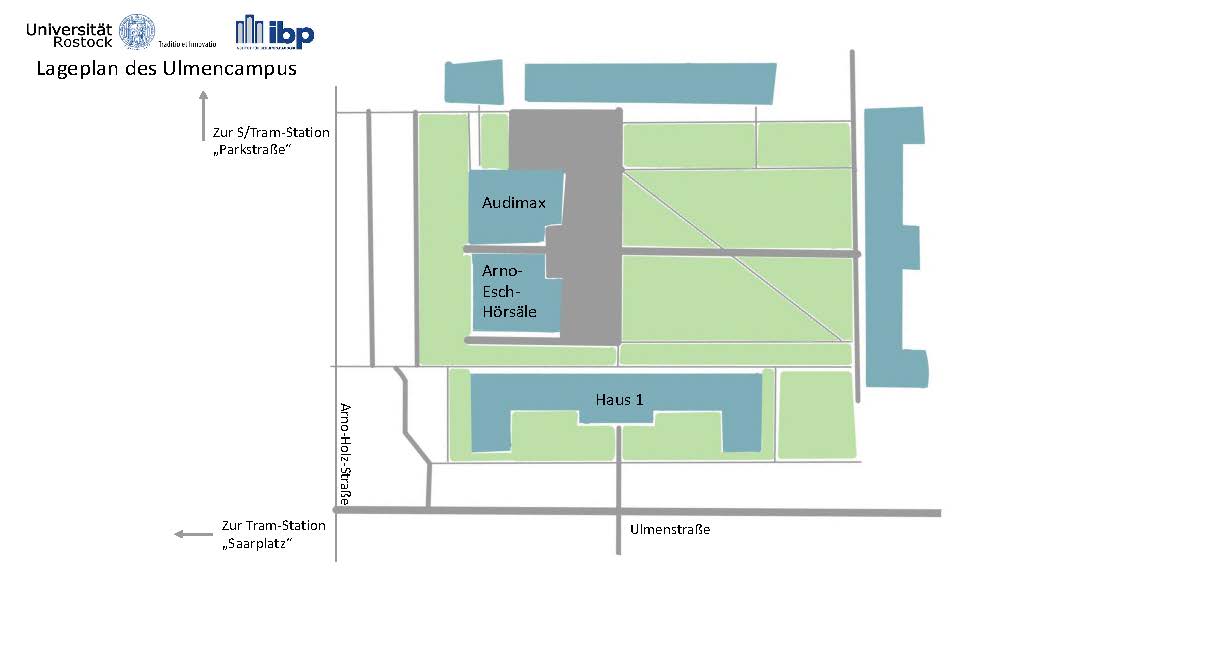
Place of Meeting:
Universität Rostock
Ulmencampus
Ulmenstraße 69
18057 Rostock
Directions from Rostock main train station to the conference location:
Straßenbahn/Streetcar:
Go to the tram stop in the basement of the main train station. Take tram line 3 or 6 in the direction of "Neuer Friedhof". You drive until the first stop, "Parkstraße". From there, just follow the "Arno-Holz-Straße" and you'll find the campus on the left.
S-Bahn/Train:
From the main train station, take the S1, S2, or S3 towards Warnemünde to the "Parkstraße" stop. This is the next stop directly, so the ride only takes a few minutes. From there, just follow the "Arno-Holz-Straße" and you'll find the campus on your left.
Car:
From the main train station, drive onto the Goethestraße and follow the road until you reach "Zum Vögenteich" and turn right onto the street. At the next intersection, turn left onto "Arnold-Bernhard-Straße" and follow the road. Then turn right onto Ulmenstraße. After a short drive, the Ulmencampus (Ulmenstraße 69) is on the left.
Unfortunately, there is no parking available on site. The closest parking option is the parking garage at Doberaner Hof. From there, you can take the tram to the campus.
| Hotel/ Contact: | Price single room: | Price double room - for single use: | Booking code: | Booking Method: |
| Hotel Sportforum: Kopernikusstraße 17A, 18057 Rostock, www.hotel-sportforum.com | 95 € (S/B) | 112,50 (S/B) | BWP-2026 until 31.07.2026 | reserve a room: Tel: +49 (0) 381 - 128 848 185 , mail: gruppenreservierung@hotelsportforum.de |
| scanhotels Rostock: Lange Str. 40, 18055 Rostock, scanhotels-city.de | - | 209 € | BWP-2026 until 31.07.2026 | telefone number for reserving: +49 381 3750 3500 , mail: reservations.city@scanhotels.de |
| IntercityHotel Rostock: Herweghstraße 51, 18055 Rostock, hrewards.com/de/intercityhotel-rostock | 99 € (S/B) | 119 € (S/B) | BWP-2026 until 31.07.2026 | for questions and discussing further details reach us under +49 381 4950 991, via mail groups.rostock@intercityhotel.com |
| pentahotel Rostock: Schwaansche Str. 6, 18055 Rostock, www.pentahotels.com/hotels/germany/rostock | - | 159 € (S/B) | use the weblink! deadline: 31.07.2026 | enclosed is the weblink for your provided download quota; in English: app.mews.com/distributor/59bd1ef2-28e8-4c99-ae14-b29900bc4e6a in German: app.mews.com/distributor/59bd1ef2-28e8-4c99-ae14-b29900bc4e6a |
| Hotel Am Hopfenmarkt: Buchbinderstraße 10, 18055 Rostock, am-hopfenmarkt.com | 85 € (S) | 115 € (S) | BWP-2026 until 01.04.2026 | guests are asked to contact us directly. info@am-hopfenmarkt.de , 0381 2036247 |
| B&B HOTEL Rostock-Hafen: Gaffelschonerweg 1, 18055 Rostock, www.hotel-bb.com/de/hotel/rostock-hafen | 82,90 € (S/B) | 106,80 € (S/B) | BWP-2026 until 31.07.2026 | please only contact us via mail: rostock-hafen@hotelbb.com |
| Trihotel Rostock: Tessiner Straße 103, 18055 Rostock, www.trihotel-rostock.de | - | 109 € (S/B) | 663.454 (BWP-2026) until 31.07.2026 | booking via website or mail: reservierung@trihotel.de or info@trihotel.de |
| Hotel & Gästehaus Rostock: Warnowallee 23-24, 18107 Rostock, gaestehaus-rostock.de | 73 € (S) | - | BWP-2026 & Groupreservation number: 7710 until 31.07.2026 | via mail to info@gaestehaus-rostock.de |
| Motel One Rostock: Schröderplatz 2, 18057 Rostock, www.motel-one.com/de/ | - | 109 € (S) | UNI150926 until 15.08.2026 | fill in the formular (link underneath) and send it to the hotel |
S = stay
S/B = stay with breakfast
Walking Distance to the Conference Place
- Hotel Sportforum: 27 min (1,9 km)
- scanhotels Rostock: 25 min (1,8 km)
- IntercityHotel Rostock: 32 min (2,3 km)
- pentahotel Rostock: 30 min (2,2 km)
- Hotel Am Hopfenmarkt: 32 min (2,3 km)
- B&B HOTEL Rostock-Hafen: 48 min (3,5 km)
- Trihotel Rostock: 1h 4 min (4,6 km)
- Hotel & Gästehaus Rostock: 2h (8,8 km)
- Motel One Rostock: 23 min (1,6 km)
Conference Committee:
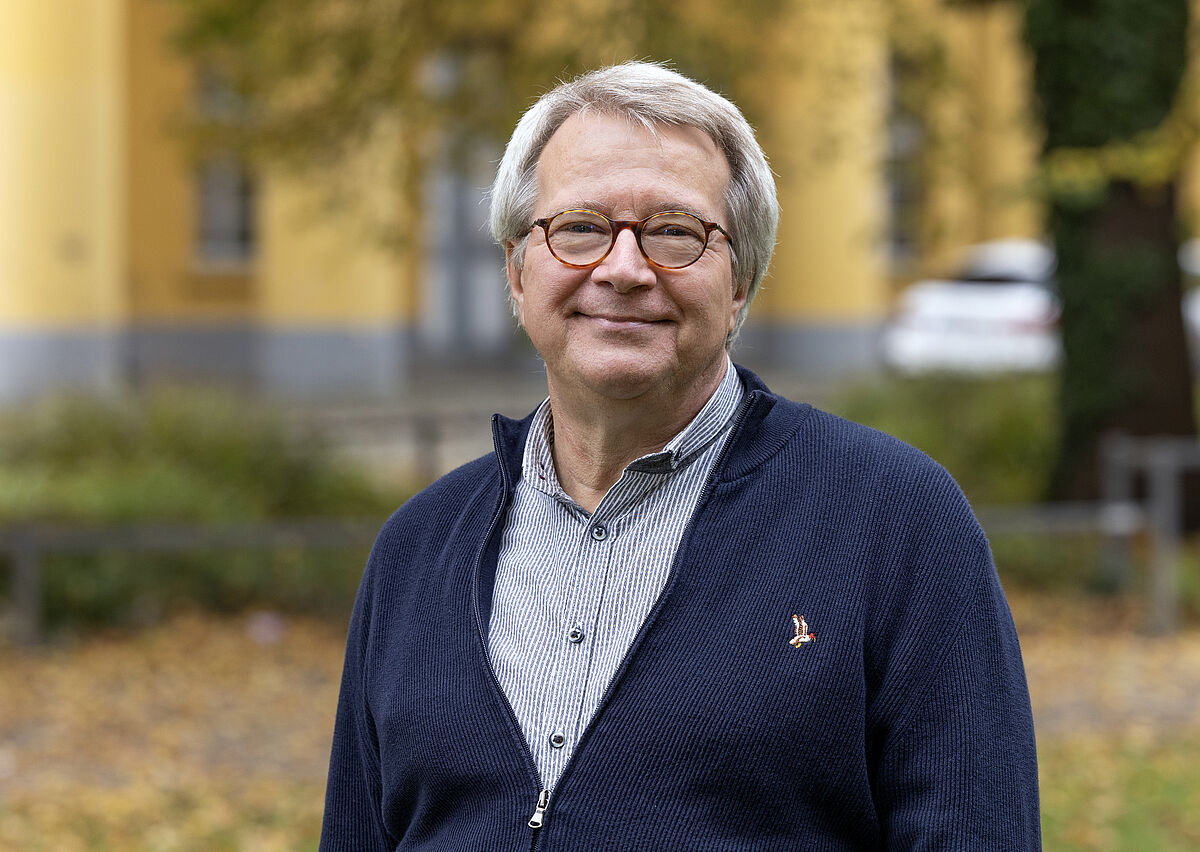
Prof. Dr. Franz Kaiser
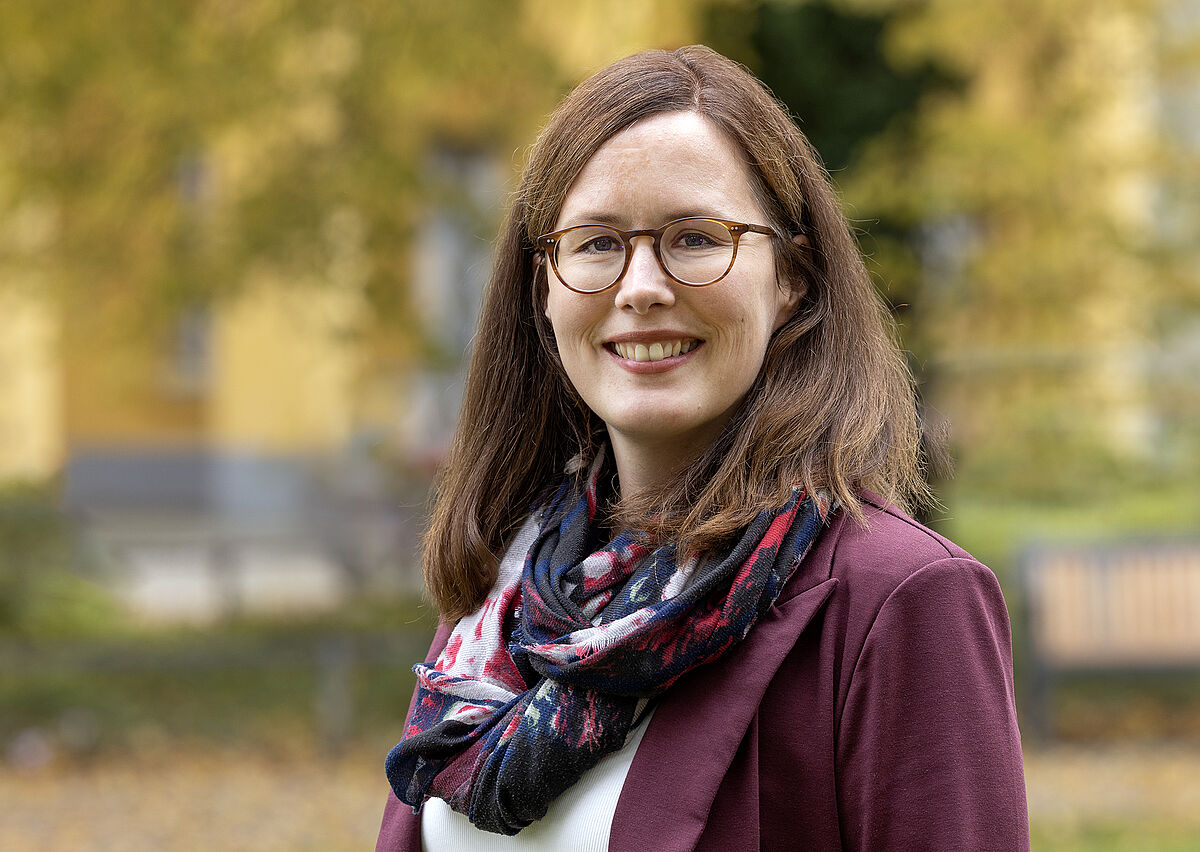
Prof. Dr. Tamara Riehle

JProf. Dr. Marie-Ann Kückmann
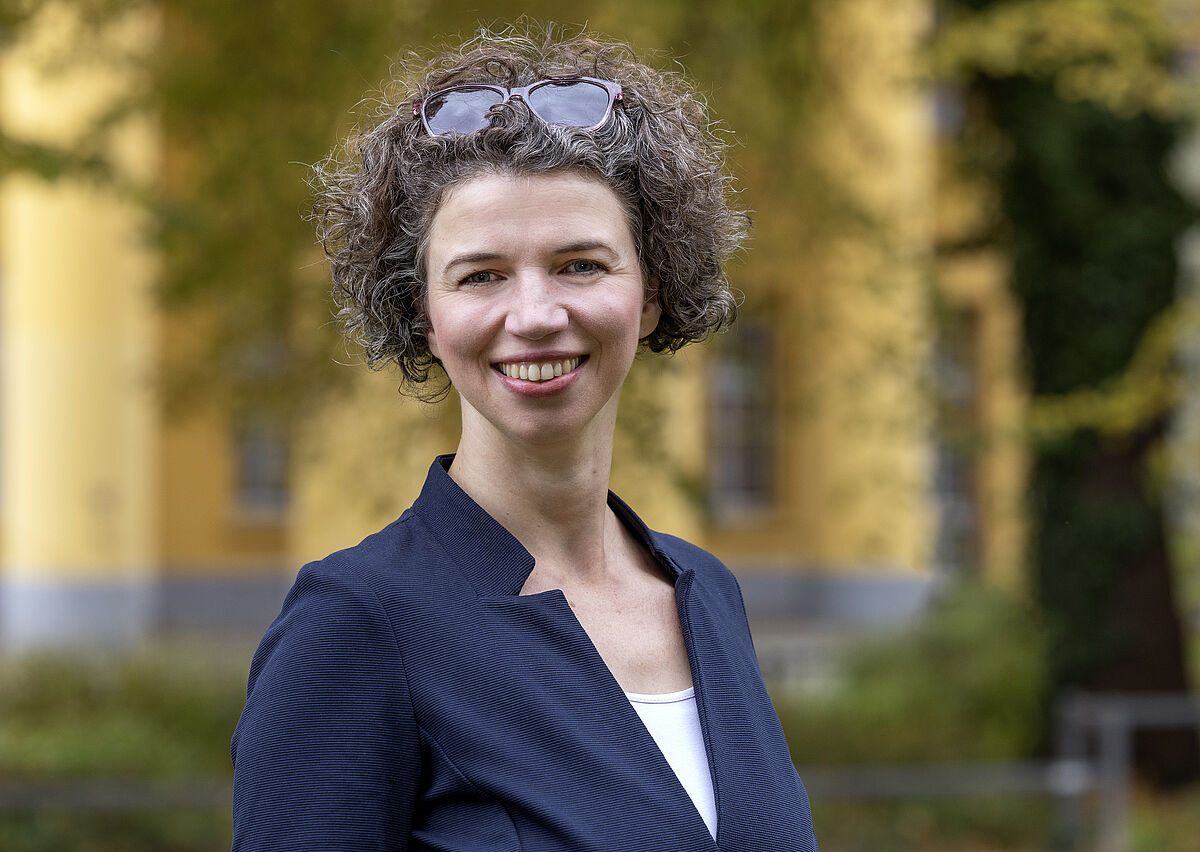
Dr. Claudia Kalisch

Organising Committee:
Denise Bruch

Sophia Heller

Anna Hanf
Helen Hemprich (student assistant)